A hunting or wildlife-watching expedition over the lands of East Africa, often lasting days or weeks—that was the original definition of the word safari when it first seeped into English in the 1800s from the Swahili Coast. The inhabitants of this narrow strip flanking the Indian Ocean between Somalia and Mozambique pilfered the word themselves from the Arabs, in whose language safar meant and still means journey. For my East Africa journey, I had not the luxury of weeks, but just four trickling days.
Shortly before eight o’clock on a Friday morning, with the sun barely rested on its seat, a moss green minivan muffled out of the congested sinus of Nairobi, Kenya’s bustling capital. In the orange light, caravans of exhaust-belching trucks choked the Central Business District. Herds of men and women spilled from the sides of road onto the tar-tainted pavement, sluggishly making their way by foot to work. With more than five million residents, downtown Nairobi feels as if it’s about to burst. One extra pair of sandals on the ground and the entire city would spill over, sending all the cars and people sliding like an avalanche of sand down the side of a desert dune. The opening of a new Chinese-built expressway in 2022 provided a little relief to the busy metropolitan thoroughfares, but those who refuse the toll—and there are many—still toil with the daily gridlock.
The city haze finally lifted after about half an hour. Daniel, my safari driver and guide for the next three days, weaved expertly around the processions of cement and cargo trucks on the main road that connected cosmopolitan Nairobi with seaside Mombasa. In my attempt to break the ice and set a convivial tone for our next few days together, I asked everything that drifted into my mind concerning Kenya.
We spoke about languages, a perennial favorite subject of mine. Of Swahili, we ruminated over its fascinating development. Modern Swahili, whose name is rooted in the Arabic sawahil, meaning “of the coast,” emerged from the contact between Bantu-speaking African tribes and Arabian traders. Over the centuries, it crept up from the shores of East Africa and followed the ivory and slave routes inland, north to Uganda and west to Congo, to become the supreme lingua franca of East Africa. Of English, Kenya’s other national language, I noticed that the people here spoke it with a particular stiffness. There is a rigidity in their vowels and an old-time dignity to their words that shone, especially whenever Daniel instructed me to “alight from the car” during a pit stop.

We spoke about tribalism, a word that brings bubbles of tension beneath the skin when spoken by Kenyans. Of the Kikuyu, Kenya’s largest ethnic group and the one to which Daniel belonged; and of the Maasai, a wiry custom-bound people known for their distinctive dress and whose lands we were approaching. The notion of Kenya as a multi-ethnic state of roughly 42 tribes is commonly accepted, though no one can seem to name an exact number. Censuses between 1948 and 2009 have counted from 38 to over 120 ethnicities, and the country moves between periods of relative calm and heightened sensitivity that sometimes culminates in ethnic violence. Many like Daniel believe in leaving tribalism in the past. They are quick to dismiss ethnic classification as a political vehicle, concocted by politicians to influence voting behavior. Some recognize it as a legacy of colonialism, when Europe needed a way to mold the continent into manageable units during the Scramble for Africa. But for certain minority groups such as Kenyan Asians—descendants of Indian laborers brought to Africa by the British—being counted as a tribe of Kenya is a promise of recognition and belonging.
We spoke about Kenya’s gold and silver: tea and coffee. After China and India, Kenya is the third largest producer of tea and the top producer of black tea. And with regards to coffee, Kenya AA beans—matured in rich, high-altitude volcanic soil—are considered to be some of the finest in all the world. So of the two, which did Daniel prefer to drink?
“Tea, always with a splash of milk,” was the unflinching response. “Tea is class.” Tea is class was the consensus of all the Kenyans I had met and would go on to meet during my short stay. Despite the country’s reputable name as a coffee grower, most locals hardly pay any mind to it. The destiny of a coffee bean grown in Kenya was always meant to be fulfilled in a Western cup.
We spoke about roses. Not of its poetic beauty, but of its economic viability. In recent decades, flowers grown, graded, and packaged in greenhouses around the lake of Naivasha to Nairobi’s northwest have superseded coffee as one of Kenya’s top exports. I have seen pallets of them at Jomo Kenyatta Airport, mountainous stacks of delicate bouquets in cooling rooms, all gingerly waiting for their flight out of Africa. Today, more than a third of flowers sold in Europe come from Kenya. The fact came as a surprise, because even when the trees began blotting the landscape like bumps on an avocado rind and the backdrop changed from cement gray to dust then green, I do not recall seeing so much as a single petal.

I don’t have any memories of Kilimanjaro looming into view. It was hidden under a thick duvet. A while had passed since we veered off the Nairobi-Mombasa Road, and I guess it must have been close to midday when Daniel simply announced that we had arrived.
In front of the gateway to Amboseli National Park, I had my first interaction with the Maasai. The encounter turned knots in my stomach. Daniel had “alighted” for a moment to organize our entry passes, and I was left to myself when four elderly Maasai women descended upon the safari van. Carrying fistfuls of beaded bracelets, they flapped their wings, showing off their jewelry and each other in sweeping invitations for a photo op. In their focused gaze and brazen demeanor was a hawkishness that unsettled me. I had the feeling that they could peer right through my clothes, my pockets, the leather of my wallet and count the precise number of shillings and dollar bills I was keeping from them. As the harpies circled in on their prey, a man closing in on his twilight years approached and looked through the cracked-open window at me.
“Why don’t you take a picture of them?” he asked, gesturing at the women, his wives. I declined and tried to muster up a confident smile, but the corners of my mouth quivered with unease and I’m sure he noticed it too. We went through the motions of making small talk—where I was from, how long I was here for—but I wanted Daniel to come back and shush them away. Realizing I was not interested in a souvenir, the old Maasai’s sales pitch turned into a plea for alms, and when I would not yield, he squinted and soured.
“You say that you are American, but the Americans who come here are generous,” he said provokingly, taking a long pause the way a scorpion does before delivering a fatal blow. “But the Chinese are not. Why?” There it was, the sting. I’m sure he would have made a fine politician, putting tribalism on a global stage like that. Still, the question irritated me like iodine, even much later after we had entered the park, checked into the Ol Tukai Lodge, and I was sitting on my patio looking out to the great green savannah.

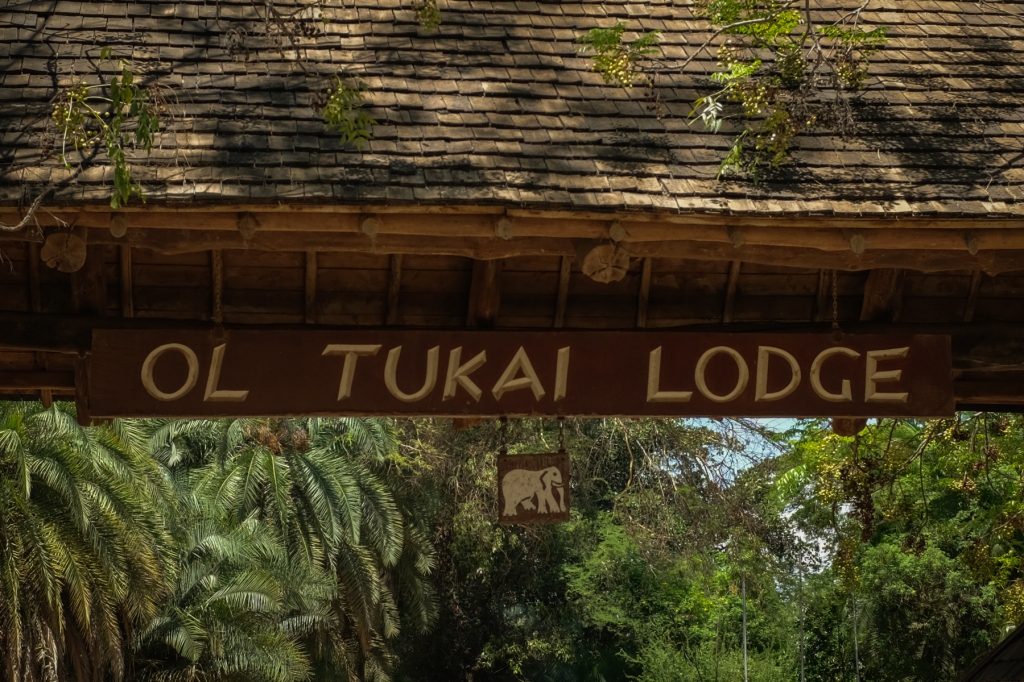
The first game drive began at 3:30. After a lunch buffet of arrowroot, tree tomatoes, chapati, and chutney, we took to the grassy plains. Daniel spat pieces of trivia about each of the animals we ran into. Warthogs are the stupidest animals in the bush. They’ll be running from a lion one minute and forget why they’re running the next. Of the antelope species on the plain, you can always identify a graceful Thomson’s gazelles by the signature black stripe running across its flanks. Over there, a horned deer, or “ladybug,” as Daniel called it. Only toward the end of my safari did I realize that he had been saying “reedbuck.” It was difficult to hear Daniel from the driver’s seat while standing and watching the wildlife from the roof hatch of the minivan, and I misheard a lot. A “Tsavo cat” turned out to be a serval cat, and a “coy bastard” revealed itself to be a kori bustard—the largest and heaviest flying bird in Africa.
We spotted aves large and small: ostriches to insect-sized warblers; pink-winged greater flamingos and their red-legged lesser cousins; secretarybirds with luscious lashes, bright blush, and thigh-high stockings; Egyptian geese, considered sacred by Ancient Egyptians; and the national symbol of Uganda—the gray crowned crane, with its headdress of golden feathers. Some were reticent and never allowed us to get too near. Others were curious, flying next to our van in neat choreography. We moved in synchronized unison, leaving behind brown swirls of dust. In the distance, I could see a monstrously large flock; a shifting, ravenous spirit wandering to and fro in the skies, for a moment, it even swallowed up the sun.


“You picked a very nice place to stay,” said Daniel as we headed back to Ol Tukai under a lilac African dusk. I thought I had made a fine choice too, and was proud to hear his approval. The lodge’s location inside Amboseli meant that we didn’t need to spend an additional hour each day driving in and out of the national park.
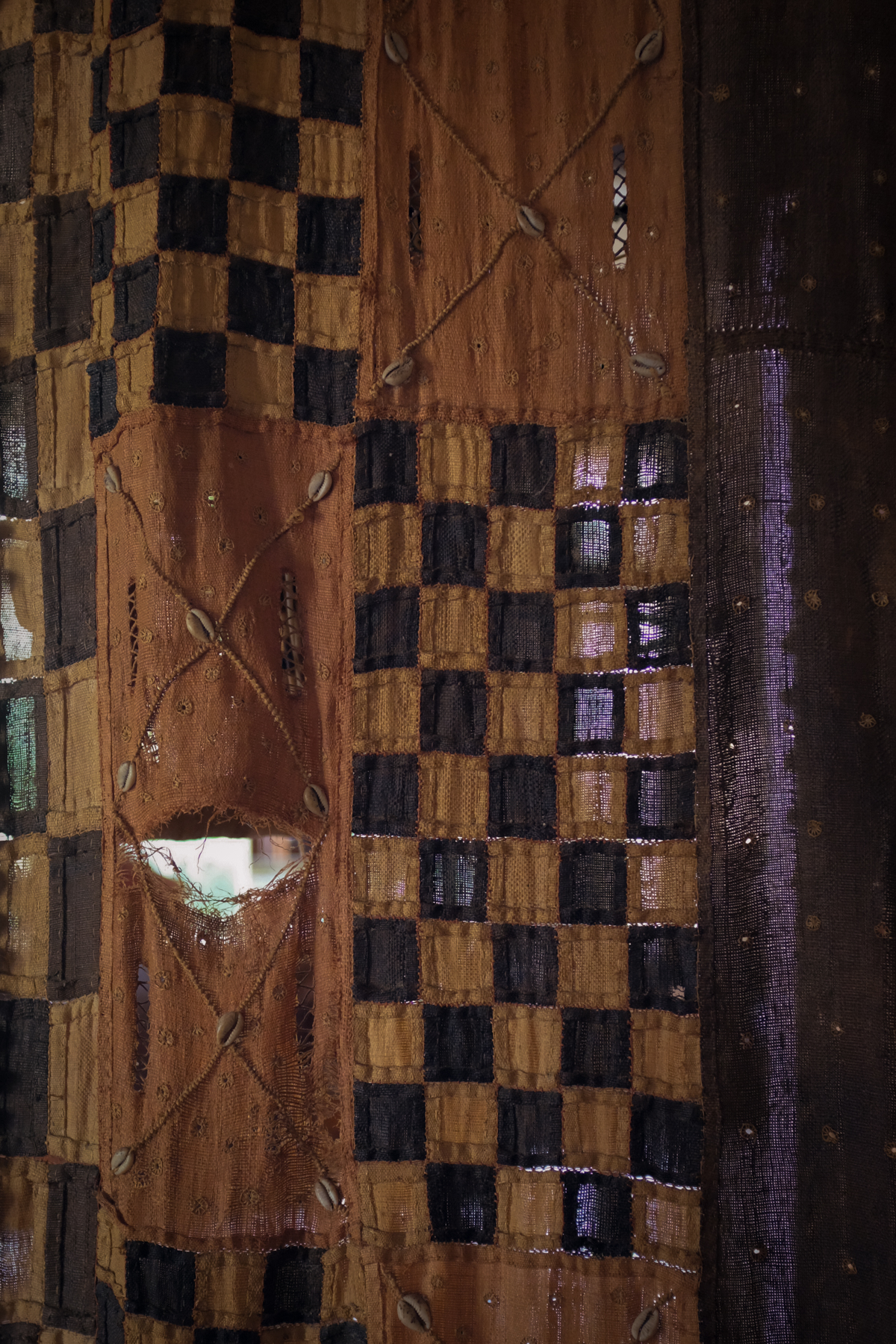
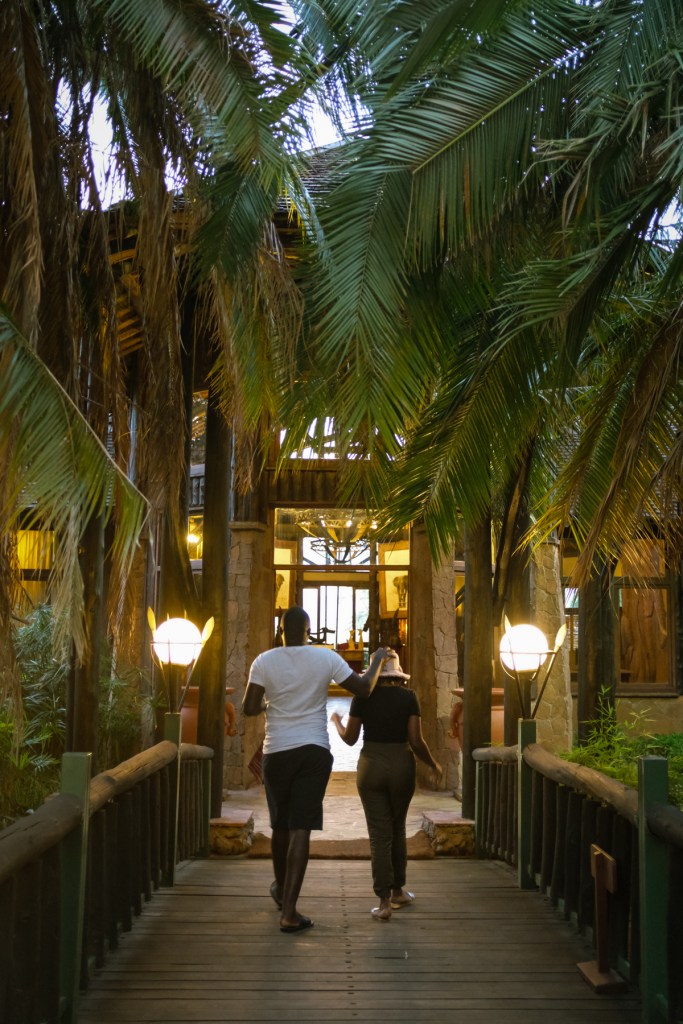
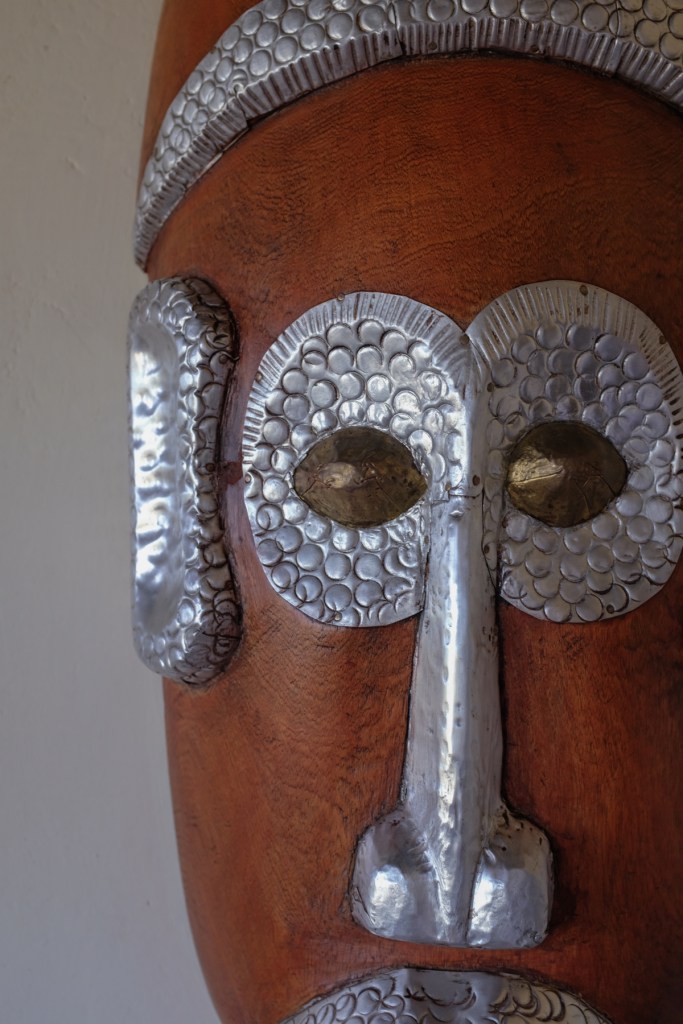
Ol Tukai is a sublime homage to the romantic Africa, a place that makes the ribcage expand almost as wide as the open spaces themselves with excitement. The name of the lodge comes from Maa, the language of the Maasai, and means doum palm, a native tree that thrives in these areas. The main building is a massive edifice made of timber, embellished with elements from the continent: drapes of Congolese Kuba cloth, strewn with raffia palm and cowries; decorative wood and metal masks; feathered Cameroonian juju hats; and ball lights set like illuminated gems into rings of Maasai spears. In the evening, under the white glow of a full equatorial moon, I watched a fat hippopotamus under the slender silhouette of an acacia tree. It was lugging its massive body through the swamp, and the slow squelch of its hooves in the mud gave my ears an intense tickling. The night was steeped in serenity. I fell soundly asleep, riding away on this incredible dream of being in the center of Africa, so remote and unlike anything I’ve ever known.

It must have rained during the night, because the morning blessed us with a cloudless firmament. Stepping out of my wooden chalet at the edge of the resort grounds, everything looked unbelievably immense and widescreen. At 6:30 in the morning, as I made my way to breakfast, eagerly anticipating the first cup of freshly brewed coffee I would have in days, I caught sight of the hero and protagonist. There it was, Africa’s highest point—Kilimanjaro—bare in front of me. Its peak has inspired writers including Hemingway, whose 1936 short story “The Snows of Kilimanjaro” preserved an image of Amboseli that would go on to captivate the attention and imagination of generations to come. Present-day Ol Tukai is said to have opened its doors on the original setup for the 1948 film crew, who shot the acclaimed adaptation starring Gregory Peck. The story and the movie begin identically: “Close to the western summit there is the dried and frozen carcass of a leopard.” If that was true and still untouched, I imagined it surely would have been thawed into a dry pile of sinew and bones on that early May day.

It’s been a very long time since anyone has spotted a leopard in Amboseli. Many believe there are no longer any left. There was a time when all the Big Five game—the buffalo, elephant, leopard, lion, and the rhinoceros—could all be spotted on a single morning drive. Since then, the black rhinos which had been the pride of the park have gone extinct in Amboseli, speared or succumbed to drought. Of the remaining four, only three can still be seen relatively easily. The African bush elephant now has top billing: Amboseli is one of the best places in the world to admire these free-roaming herds. Drawn to Ol Tukai’s plentiful swamps, every morning, the gentle giants can be seen drinking, showering, and splashing themselves with trunkfuls of earth and cooling mud. African buffalo can also be found nearby. Like the elephants, they love to wallow in the water and the mud.


“There, a cheetah,” said Daniel in a loud whisper and pointed to an unfathomable distance. I picked up his binoculars from the back pocket of his seat. As I scoured the landscape for signs of the spotted cat, I heard him exclaim with excitement, “There are two of them!” After some time fiddling with the focus wheel, I caught the duo through the eyepiece, blurry but unmistakeable. And then, about a dozen paces behind, stepping out of the stalks of grass was a third, and then a fourth. It was a coalition. We couldn’t believe our luck. A pack of cheetahs was an uncommon sight in Amboseli, even for Daniel, who had been driving visitors here for more than a decade.
The cheetahs were lean. There was not an extra ounce of fat where it shouldn’t be on their machine-like bodies. Each cat sported a short, tousled mane that ran from the top of his head down the shoulders. The pack of males looked fairly young, and judging by their similarity, were probably litter mates that have stuck together. Ever gradually, they neared the van. At one point, we could hear them calling back and forth, their birdlike chirps betraying an otherwise cunning appearance and sinuous gait. Like domesticated kittens, they lazed and played, nuzzling each other and rolling over to expose their white underbellies to the sun. They were not in the least way shy and swaggered up to the van, which by this time had assimilated into a fleet of a dozen or so safari vehicles. In the national parks, guides use a citizens’ band radio system to speak with each other. Originally a communication tool reserved for emergencies, over the years, it has become a way for safari drivers to scout for wildlife together. More than any other sound on the savannah, I remember the boisterous and crackling chatter of Swahili through the transceiver over a faint chorus of summer cicadas.
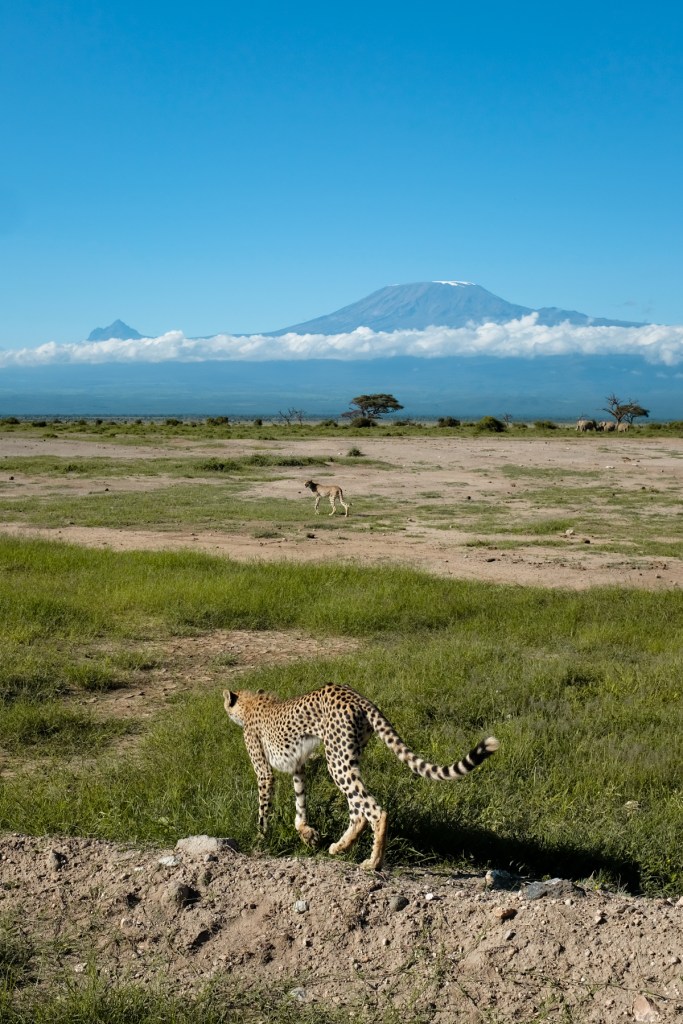

Game reserves are a kind of theater: You pay your admission fee and you enter, knowing you will see a spectacle with a cast of thousands, but never sure, as the scenery changes, what actors will move to the center of the stage.
Marvin Siegel, The New York Times
I lost track of the number of animals we saw that day, but it was no fewer than 20. Among the rarer sightings were a sleeping lioness, a jackal, spotted hyenas, and an African wild dog. There were a fair number of carcasses too, mostly fallen zebras in various states of decay. The color of the pelt faded first, with the black and white stripes becoming the same as the earth. And then, when the hide became leathered and worn, the bones jutted right out. In any other scenario, it would have been a macabre scene, but not here on the safari. Here, it was simply the circle of life, and no arc is spared from sight.

I didn’t want to leave Amboseli. Mainly because my time at Ol Tukai was too short and left me no time to study in depth and run my fingers over all the details of its character. But I was also nervous to visit the Maasai in their village, outside of the park gates. Would they be like the family in front of the Iremito Gate? I wasn’t sure if I had enough generosity left in me to find out.
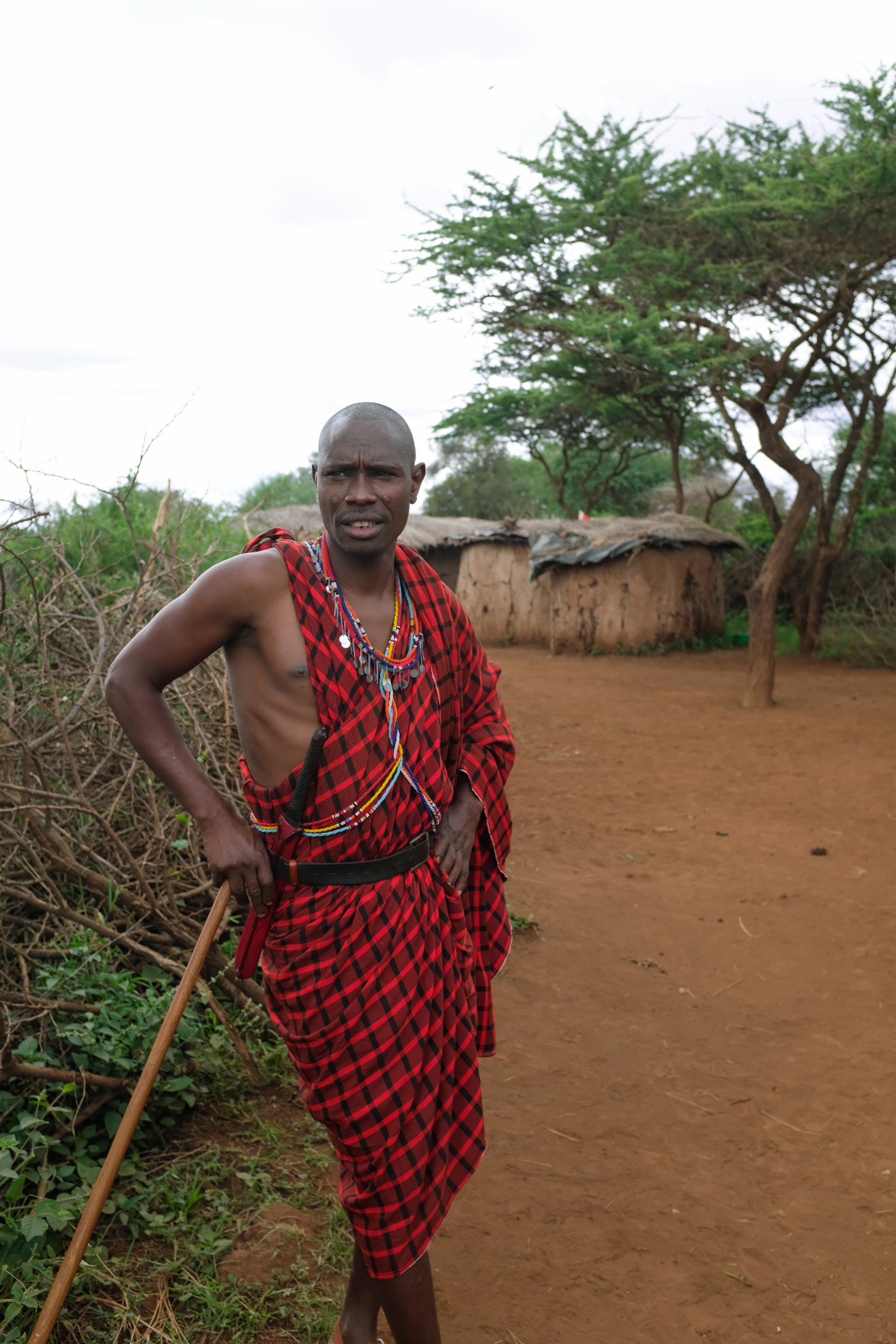
Traditionally, the Maasai were regarded by the tribes of East Africa and the British alike as being fierce warriors. But in postcolonial Kenya, the loss of traditional grazing lands have posed an ever-increasing challenge for these nomadic pastoralists. We drove in the southeast towards Oloitokitok, a town on the border to Tanzania, passing smatterings of earthly homesteads. In an absolute nowhere, Daniel pulled the van to a stop by the roadside. Waiting for us was a middle-aged man with a compassionate, Buddha-like face. He had long hanging earlobes and was draped in red tartan, a shuka. I took him to be the chief of the village, as I had read that the one who collects the entrance fee into such traditional Maasai villages was usually the chief. He spoke a fine English and was adorned simply, without the extravagance of any rainbow beads or silvery flakes of metal I had seen in images of the Maasai from National Geographic. After a brief explanation of the program du jour, we entered the settlement, enclosed within a brittle-looking fence made of loosely bound dead hedge. Daniel stayed behind, temporarily transferring his guide duties to the “chief,” whose name was Rafael.


The tour began with a welcome song and dance by a group of about a dozen men and women, what seemed like all of the adults present in the village, or manyatta. They harmonized in a melody I couldn’t quite follow, occasionally breaking their voices in a loud and startling yip, and the men bent themselves back and forth like blades of reed. Each man took his turn performing the acrobatic adumu, shooting their bodies upright into the air like arrows in a jumping dance. The ceremony concluded with a prayer to Engai, the Maasai’s one god. I think I would have much preferred a more discreet greeting, but there was nothing to help my discretion or detract from the lack of it, as I was the only visitor and the entire village had convened solely for me.
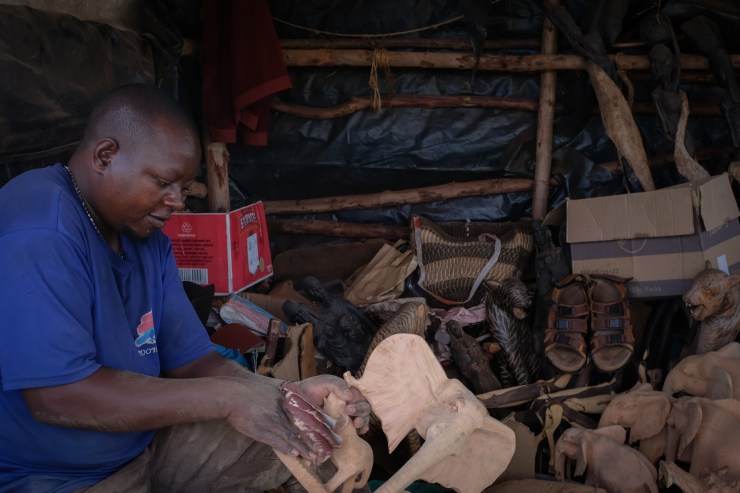
We proceeded on our tour of the settlement, and Rafael led me into one of the handful of houses encircling the cattle pen. Livestock, being the Maasai’s most valuable commodity, slept in the center. The houses were composed of a mixture of grass, twigs, and elephant dung, but they had no smell to them and had the appearance and feel of dried clay. The visit wound by the station of the laibon, or medicine man, who expounded upon the miraculous virtues of the local herbs. On the table were barks, roots, and leaves that could cure all sorts of ailments, from poor eyesight to difficult pregnancies to coughing and diabetes. Next, two Maasai ilmoran, or warriors, led me aside to demonstrate fire-making by spinning a small stick between the palms against a log covered with dung-kindling. Finally, the tour came to a close at the marketplace for beadwork and handicraft souvenirs. If the entire process felt a little rehearsed, perhaps it was because it was. For the manyatta is a simulation—an open-air museum where Maasai culture is put on display for tourists to experience.

The creation of Amboseli as a game reserve by the British in colonial Kenya initially did not prohibit the Maasai from using the land for grazing, watering, or settlement. It was only later on, when the area was converted into a national park, that they were forbidden from entering with their herds. As hunting camps were repurposed into game-watching lodges, the Maasai around Amboseli found an economic lifeline in promoting their exoticism, clothing, and beadwork as a supplement to the safari experience. This gave rise to the cultural manyattas of Maasailand, marketed as traditional villages outside of Kenya’s national parks today.
I had many questions that I didn’t have time and the chutzpah to ask. Where did the material for the traditional Maasai attire come from? The warps and wefts of the cotton were too neat to be done by hand, the dangling shillings were too smooth and perfect. Was Rafael even a chief? Did the colors of the beads mean anything? What about the Maasai cheek markings, those tiny round scars that resembled smallpox vaccinations? I would find the answers to some of my questions back in Nairobi, at the National Museum. Much of what is considered traditional is the result of 19th-century trade. These days, the cotton textiles and glass beads are imported, with some coming from as far as China and Europe. Before cotton, the Maasai wore dyed leather, and beaded ornaments were made from locally found items such as ostrich shells, seeds, and clay. Although modern Maasai jewelry are, for the most part, purely aesthetic and devoid of the cultural context they once had, the cheek scars still mean something. These circular brandings were markers of courage and a sign of a boy’s desire to become a brave man.
“Did they explain to you why most of them wear red?” asked Daniel once we started on our return to Nairobi. “It’s to pacify the lions and make it easier to see other Maasai in the bush.”

I allowed myself to nod off on the ride back. In between a states of consciousness, I registered flashes of giant cement factories and vibrantly graffitied matatus—shared cross-country taxis. They reminded me of the aluguers Séb and I rode on in Cabo Verde. Evading the paralyzing Nairobi rush-hour traffic, Daniel dropped me off in Karen, an affluent neighborhood on the capital’s southern rim. Karen is built on the coffee farmland and estate previously owned by the Danish writer and baroness Karen Blixen. Having chronicled her years in Kenya—then a part of British East Africa—in a memoir, I was keen to find the landscapes she so vividly painted. Perhaps, I thought, I could chance upon the same muse that engendered such wondrous words and pages.
But Nairobi is no longer the what it was in Blixen’s time, and Karen is no longer the rural outskirt it once was. The vast acres of grassland which at one time could hardly be sold now crave and are craved by millions. I was disappointed to not be able to see the long ridge of the Ngong Hills, with its “four noble peaks like immovable darker blue waves against the sky.” In all directions, the view was obstructed by colonies of spacious two-story houses and their decorated iron gates. I wandered through the African upper-class suburbia until I haphazardly happened upon the nature trail leading to the Giraffe Centre. Treading over the brown earth that carved through this green grove of upland forest, I could just about experience a fleck Blixen’s life at the foot of the Ngong Hills.
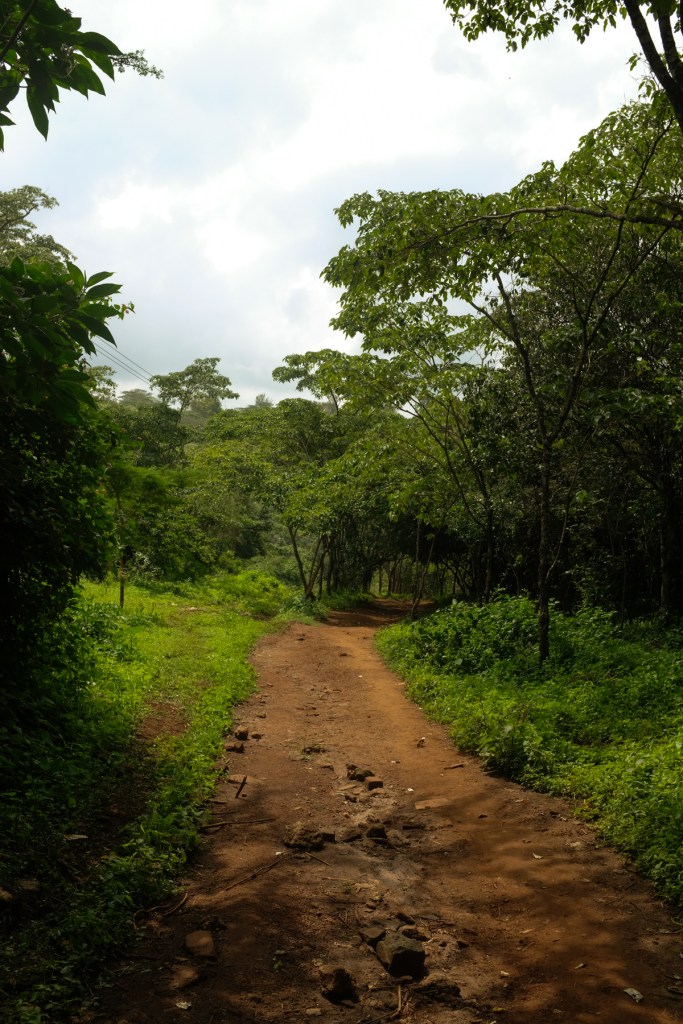

If I know a song of Africa—I thought—of the giraffe, and the African new moon lying on her back, does Africa know a song of me? Would the air over the plain quiver with a color that I had had on, or would the eagles of Ngong look out for me?”
Karen Blixen, Out of Africa

 Gregory Gioro